Pinterest thrives on visually striking content. For creators, marketers, and enthusiasts, the challenge lies in consistently producing fresh, engaging images that capture attention and drive interaction. Manually creating or sourcing a continuous stream of high-quality, on-trend visuals can be time-consuming and expensive. This guide addresses that precise challenge by providing a professional, actionable framework for generating an endless supply of viral-ready retro and aesthetic Pinterest pins using artificial intelligence. You will learn the specific prompting techniques and structural elements necessary to command AI image generators, ensuring your content stands out without requiring advanced design skills or a significant budget.
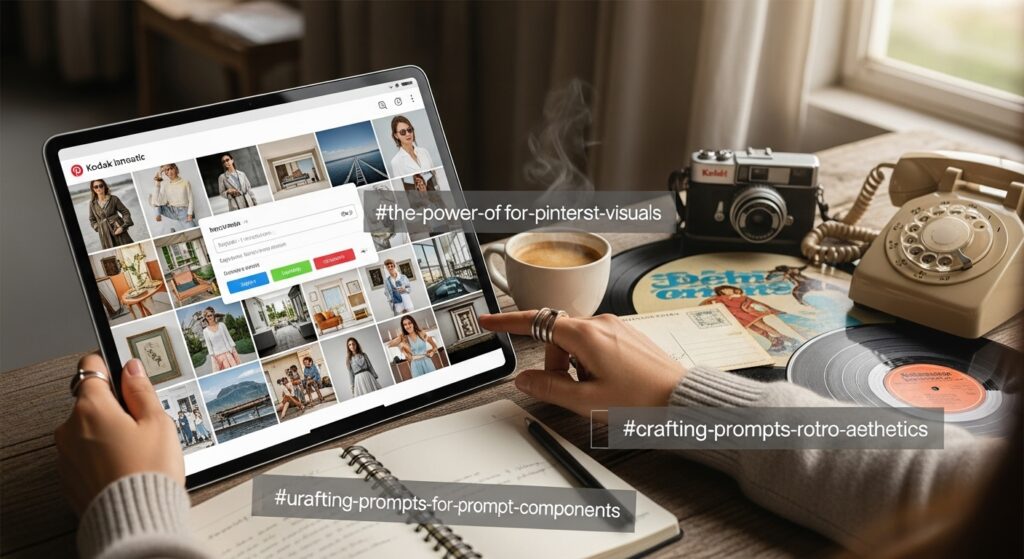
Structure Map
- The Power of AI for Pinterest Visuals
- Understanding AI Image Prompt Components
- Crafting Prompts for Retro Aesthetics
- 1970s Disco Vibe Prompts
- 1980s Neon Glam Prompts
- 1990s Grunge & Lo-Fi Prompts
- Generating Prompts for Modern Aesthetic Styles
- Cottagecore & Whimsical Prompts
- Dark Academia & Moody Prompts
- Vaporwave & Cyberpunk Prompts
- Refining Your Prompts for Pinterest Success
- Expert Improvement Tips
- Conclusion
- Frequently Asked Questions (FAQ)
The Power of AI for Pinterest Visuals
Artificial intelligence image generators represent a significant advancement for content creators, particularly on platforms like Pinterest where visual appeal is paramount. These tools allow you to describe an image using text, and the AI then renders a corresponding visual.
Why it matters: The ability to generate custom images rapidly offers several key benefits:
- Efficiency: Create numerous unique visuals in minutes, drastically cutting down production time compared to photography or graphic design.
- Cost-Effectiveness: Reduce or eliminate the need for stock photos, photographers, or expensive design software subscriptions. Many AI tools offer free tiers or affordable plans.
- Creative Freedom: Experiment with concepts and styles that might be difficult or impossible to achieve through traditional means, pushing the boundaries of your brand’s visual identity.
- Trend Responsiveness: Quickly generate content that aligns with emerging visual trends or seasonal demands, keeping your Pinterest boards fresh and relevant.
I have found that mastering prompt engineering is not just about convenience; it is about establishing a sustainable and scalable content strategy. By understanding how to communicate effectively with AI, you gain a powerful asset in your content creation toolkit.
Understanding AI Image Prompt Components
Effective AI prompts are structured and specific. They guide the AI, much like a director guides a photographer, providing all the necessary details to produce the desired output. A strong prompt typically includes several key components.
Definition: An AI image prompt is a text string that describes the desired visual output to an artificial intelligence model.
Why it matters: The more descriptive and organized your prompt, the more accurate and higher-quality the AI-generated image will be. Vague prompts lead to generic or irrelevant results.
How to structure your prompts: I recommend breaking down your prompt into core elements:
- Subject: What is the main focus of the image? (e.g., “a person reading,” “a vintage car,” “a coffee cup”)
- Style/Aesthetic: What artistic or visual style should the image adhere to? (e.g., “retro,” “minimalist,” “cinematic,” “watercolor painting,” “vaporwave”)
- Setting/Environment: Where is the subject located? What is the background? (e.g., “urban street,” “forest clearing,” “futuristic city,” “cozy cafe”)
- Key Details/Descriptors: Specific attributes of the subject or setting. (e.g., “wearing a chunky knit sweater,” “sun setting,” “neon signs glowing,” “bokeh effect”)
- Color Palette: Dominant colors or mood-setting hues. (e.g., “warm earth tones,” “cool blues and purples,” “monochromatic,” “pastel colors”)
- Lighting: How is the scene lit? (e.g., “soft natural light,” “dramatic backlighting,” “studio lighting,” “golden hour”)
- Camera Angle/Shot Type: Perspective and framing. (e.g., “close-up,” “wide-angle shot,” “overhead view,” “low-angle,” “portrait orientation”)
- Resolution/Quality: Desired output quality. (e.g., “ultra detailed,” “8K,” “photorealistic,” “high resolution”)
Pro Tip: Experiment with Negative Prompts
Many AI image generators allow for “negative prompts” where you can specify what you don’t want in the image (e.g., “blurry,” “distorted,” “watermark”). This is especially useful for refinement.
Real-world example: Instead of “a girl in a city,” a better prompt would be: “A young woman, wearing a flowing bohemian dress, walking through a bustling Parisian street at golden hour, soft natural light, shallow depth of field, warm pastel color palette, photorealistic, cinematic shot.”
Crafting Prompts for Retro Aesthetics
Retro aesthetics on Pinterest are highly sought after, evoking nostalgia and a distinct sense of style. Generating these images with AI requires specific era-defining keywords.
1970s Disco Vibe Prompts
The 70s disco aesthetic is characterized by vibrant colors, glitter, specific fashion, and a general sense of euphoria and movement.
How to do it: Focus on keywords related to fashion, music, lighting, and common imagery from the era.
Example Prompt:
“A group of diverse young people dancing energetically under a mirrored disco ball, wearing flared jumpsuits and platform shoes, surrounded by shimmering confetti, strobe lighting, vibrant purple and orange color palette, grainy film photography aesthetic, retro 1970s nightclub, wide-angle shot, high resolution.”

1980s Neon Glam Prompts
The 80s aesthetic is iconic for its neon lights, bold geometric shapes, synth-wave influences, and strong sense of futuristic optimism blended with pastels.
How to do it: Incorporate terms like “neon,” “synthwave,” “grid,” “arcade,” and 80s fashion descriptors.
Example Prompt:
“A vintage sports car driving down a futuristic city street at night, with towering skyscrapers illuminated by vibrant neon signs in pink, blue, and teal, reflections on wet asphalt, synthwave art style, 1980s retro-futurism, low-angle shot, cinematic lighting, ultra detailed.”

1990s Grunge & Lo-Fi Prompts
The 90s aesthetic ranges from gritty grunge to optimistic lo-fi tech and early internet vibes. It often features muted tones, casual fashion, and a raw, authentic feel.
How to do it: Use keywords like “grunge,” “lo-fi,” “VHS,” “cassette,” “skate park,” “oversized,” and specific color palettes.
Example Prompt:
“A lone figure sitting on a skateboard at a dimly lit urban skate park, wearing an oversized flannel shirt and ripped jeans, graffiti on brick walls, overcast weather, desaturated color palette with hints of dark green and brown, lo-fi photography, 1990s grunge aesthetic, grainy film texture, medium shot, high resolution.”

Generating Prompts for Modern Aesthetic Styles
Modern aesthetic styles on Pinterest are diverse, from pastoral fantasy to sleek digital realism. Understanding their core elements is key to effective prompting.
Cottagecore & Whimsical Prompts
Cottagecore evokes a romanticized, idyllic rural life, characterized by natural beauty, comfort, and traditional crafts.
How to do it: Focus on nature, soft lighting, rustic elements, and a gentle color palette.
Example Prompt:
“A cozy, rustic cottage nestled in a vibrant wildflower meadow, surrounded by ancient oak trees, sunlight filtering through leaves, a picnic basket with fresh berries and homemade bread, soft pastel green and yellow color palette, whimsical fairy tale art style, volumetric lighting, high detail, photorealistic.”

Dark Academia & Moody Prompts
Dark Academia centers on a passion for learning, literature, and intellectual pursuits, often with a melancholic or mysterious tone, set in old universities or libraries.
How to do it: Keywords include “library,” “books,” “gothic,” “vintage,” “sepia,” “candlelight,” and academic motifs.
Example Prompt:
“A dimly lit, grand gothic library with towering bookshelves filled with ancient texts, a leather-bound journal and quill pen resting on a heavy wooden desk, shafts of dusty sunlight piercing through high arched windows, deep sepia tones with hints of dark green, moody and mysterious atmosphere, dark academia aesthetic, intricate details, photorealistic.”

Vaporwave & Cyberpunk Prompts
These aesthetics share futuristic and often dystopian elements, with Vaporwave leaning into retro-futurism, glitches, and digital dreamscapes, while Cyberpunk is grittier, focusing on high tech and low life.
How to do it: Use terms like “neon,” “glitch,” “hologram,” “rainy,” “dystopian,” “chrome,” and specific color combinations (pinks/purples for Vaporwave, deep blues/reds for Cyberpunk).
Example Prompt:
“A desolate urban alleyway at night, illuminated by flickering neon signs in vibrant pink and blue, holographic advertisements floating in the rain, a lone figure in a trench coat, wet streets reflecting light, cyberpunk aesthetic, gritty realism, high contrast, cinematic shot, 8K.”

Refining Your Prompts for Pinterest Success
Generating initial images is one step; optimizing them for Pinterest is another. Pinterest’s visual search algorithm favors high-quality, relevant, and unique images.
Why refinement matters:
- Engagement: Highly refined images attract more clicks, saves, and outbound traffic.
- Searchability: Specific, well-crafted visuals are more likely to appear in relevant searches.
- Brand Consistency: Ensures your AI-generated content aligns with your overall brand aesthetic.
How to refine your prompts:
- Iterate and Add Detail: If your first attempt isn’t perfect, don’t discard it. Add more descriptive adjectives, specify textures, or adjust lighting.
- Initial: “A cat in a garden.”
- Refined: “A fluffy ginger cat playfully stalking a butterfly in a sun-dappled English cottage garden, intricate floral details, soft golden hour light, shallow depth of field, whimsical, photorealistic.”
- Experiment with Keywords: Small changes to keywords can drastically alter the output. Try synonyms or more specific terms.
- Instead of “bright,” try “luminous,” “radiant,” or “vibrant.”
- Instead of “old,” try “vintage,” “antique,” or “weathered.”
- Specify Aspect Ratios: Pinterest pins are typically vertical (e.g., 2:3, 9:16). Most AI generators allow you to specify output dimensions. Always aim for vertical images to maximize screen real estate on Pinterest.
- Incorporate Emotional Cues: Describe the mood or feeling you want the image to evoke.
- “Serene morning,” “exciting adventure,” “cozy evening.”
- Use AI Generator-Specific Modifiers: Some platforms have their own proprietary modifiers or prompt structures that can further enhance results (e.g., Midjourney’s
--arfor aspect ratio, or--style raw). Consult the specific tool’s documentation.
Warning: Avoid Over-Prompting
While detail is good, too many contradictory or unnecessary keywords can confuse the AI, leading to chaotic or nonsensical images. Keep your prompts focused and coherent.
Expert Improvement Tips
Beyond the basics, these strategies will help you produce truly exceptional Pinterest pins with AI.
- Leverage Image-to-Image Generation: Many advanced AI tools allow you to upload an existing image and use it as a stylistic or compositional reference. This is powerful for maintaining brand consistency or translating a specific photo’s vibe into new AI-generated content. You can take a successful pin and create variations or themed expansions.
- Utilize Negative Weighting for Control: Instead of just negative prompts (what not to include), some AI systems allow you to assign negative weights to certain keywords, telling the AI to strongly avoid those elements. This offers finer control than simple exclusion, preventing subtle undesired elements from appearing.
- Batch Generation and Curated Selection: Don’t settle for the first image the AI produces. Generate multiple variations (e.g., 4-8 images per prompt) and curate the best ones. Often, a slight variation will be significantly more visually appealing or better align with your Pinterest strategy. This also provides options for A/B testing on Pinterest itself.
- Combine Distinctive Art Styles: Experiment by merging two or more seemingly disparate art styles. For example, “cyberpunk aesthetic meets impressionistic painting” or “vintage botanical illustration with neon accents.” This often results in highly unique and attention-grabbing visuals that are distinctive on a platform saturated with content.
- Understand Pinterest’s Visual Trends: Before prompting, spend time observing what’s currently trending on Pinterest within your niche. Look at color palettes, subject matter, and overall mood of popular pins. Use these insights to inform your AI prompts, ensuring your generated content is not only high-quality but also highly relevant to what users are searching for and engaging with.
Conclusion
Harnessing AI image generation for Pinterest content represents a significant leap forward in efficiency and creativity. By mastering the art of prompt engineering, you gain the ability to produce a continuous stream of captivating, high-quality visuals tailored to popular retro and aesthetic styles. We have explored how to structure effective prompts, provided specific examples for various sought-after aesthetics, and outlined advanced strategies for refining your outputs. Remember that successful AI image generation is an iterative process of experimentation and refinement. With the frameworks and tips provided, you are now equipped to generate unique, viral-ready Pinterest content that will captivate your audience and distinguish your brand.

Frequently Asked Questions (FAQ)
Q1: What AI tools are best for generating Pinterest images?
A1: Popular and highly capable AI image generators include Midjourney, DALL-E 3 (often integrated into ChatGPT Plus), Stable Diffusion (open-source and customizable), and Adobe Firefly. Each has its strengths in terms of style, ease of use, and pricing, so I recommend experimenting to find which aligns best with your needs and aesthetic preferences.
Q2: Do I need to be a professional artist or coder to use AI image generators?
A2: Absolutely not. Most modern AI image generators are designed with user-friendliness in mind, requiring only text prompts. While understanding prompt structure helps, no artistic or coding background is necessary to start creating compelling visuals.
Q3: Can I use AI-generated images commercially on Pinterest?
A3: The commercial use of AI-generated images depends on the specific AI tool’s terms of service and licensing agreements. Many tools, especially paid tiers, allow commercial use, but it is crucial to review their policies to ensure compliance. Always check the intellectual property rights associated with the AI you are using.
Q4: How do I ensure my AI-generated pins stand out from others?
A4: To make your pins stand out, focus on unique prompt combinations, blend different aesthetic elements, and emphasize specific details or moods. Don’t just generate; curate. Choose the most striking images, and consider adding text overlays or subtle branding in a traditional image editor after generation to give them a distinctive touch.
Q5: What aspect ratio should I use for Pinterest pins?
A5: Pinterest strongly favors vertical images. The ideal aspect ratio is typically 2:3 (e.g., 1000px width x 1500px height) or up to 9:16 (e.g., 1000px width x 1777px height). Images taller than 1:2 (e.g., 1000px width x 2000px height) may get truncated in the feed. Always specify a vertical aspect ratio in your AI prompt if the tool allows.
Q6: How can I improve the text on my AI-generated images?
A6: Most AI image generators struggle to produce coherent or correctly spelled text within images. It’s often best to generate the visual background with AI and then add any desired text overlays (titles, calls-to-action, branding) using a graphic design tool like Canva, Adobe Express, or Photoshop.
Q7: Is it possible to generate images with specific people or faces using AI?
A7: While AI can generate human figures, consistently creating the same specific person or recognizable faces can be challenging and often requires advanced techniques like “in-painting” or training custom models. For general aesthetic pins, focus on describing the type of person or their actions/style rather than a specific individual.
Q8: How often should I post AI-generated content on Pinterest?
A8: Consistency is key on Pinterest. Aim for a regular posting schedule, whether daily, a few times a week, or multiple times a day, depending on your capacity. AI allows for rapid content creation, enabling you to maintain a higher posting frequency than traditional methods, but prioritize quality over sheer quantity.
Q9: Can I use existing images as inspiration for AI prompts?
A9: Yes, many AI tools allow you to upload an image and use it as an “image prompt” or “style reference.” This can be incredibly useful for replicating a certain aesthetic, color scheme, or composition. You can then add text prompts to guide the AI on new subjects or scenes while maintaining the reference image’s feel.
Q10: What if the AI generates something offensive or unexpected?
A10: AI models can sometimes produce unexpected or even undesirable content, especially if prompts are ambiguous. If this occurs, refine your prompt to be more specific, use negative prompts to exclude unwanted elements, or try a different AI tool. Most reputable AI services also have safeguards and content moderation policies in place.